Problem solving is what we do
Sometimes the smallest changes can have the biggest impact on a production line.
We recently visited one of our Over Conveyor Analysis Systems in Europe to investigate an issue with an unusual number of faults occurring on part of the lighting system - components that typically have a five year lifespan but were failing within months. The obvious assumption was that we either had an issue with the batch of lights these units were from - or perhaps a fault in the power distribution of the system was causing units to burn out.
Every test we threw at the rest of the system showed nothing was wrong. And when we checked the serial numbers of the lights that had failed in our records we could see they were from different batches - and that other units from the same batches were operating perfectly well in other sites.
A post-mortem on the failed lights showed a common cause: Overheating of the onboard power supply. The mystery was, why on this site and only this site would we have an overheating problem on units with cooling systems designed in and thermal monitoring to report rising temperatures before they become a problem?
At this point, our experience of other lines started to prove invaluable. The nagging feeling that something just seemed odd about the appearance of the system led us to the conclusion that the dust in this particular factory was unlike that we’d seen anywhere else; it was settling and sticking to surfaces in a completely different way. Instead of sitting on surfaces as dust typically does - a loose, dry build-up on horizontal surfaces but just a thin layer on vertical ones - we realised that we could see dust adhering and caking on vertical and even overhanging surfaces. Close inspection of the fans and heatsinks on the lights revealed that although the fans were just about able - as designed - to keep themselves clear and running despite this, the dust was settling and then sticking together in clumps in the grooves of the external heatsinks on the lights, gumming them up enough that the periodic high speed blast from the cooling fans could no longer clear it. The units could keep some of the internal electronics cooled - including, coincidentally, the location of the internal temperature sensor - but in other places transfer of heat from active electronics to the heatsink was severely limited. A spot increase over the chip in question was no longer able to dump heat fast enough to prevent a thermal runaway occurring internally. The lights were failing because they were faced with unexpectedly hostile ambient conditions, pushing the lights beyond their design specification.
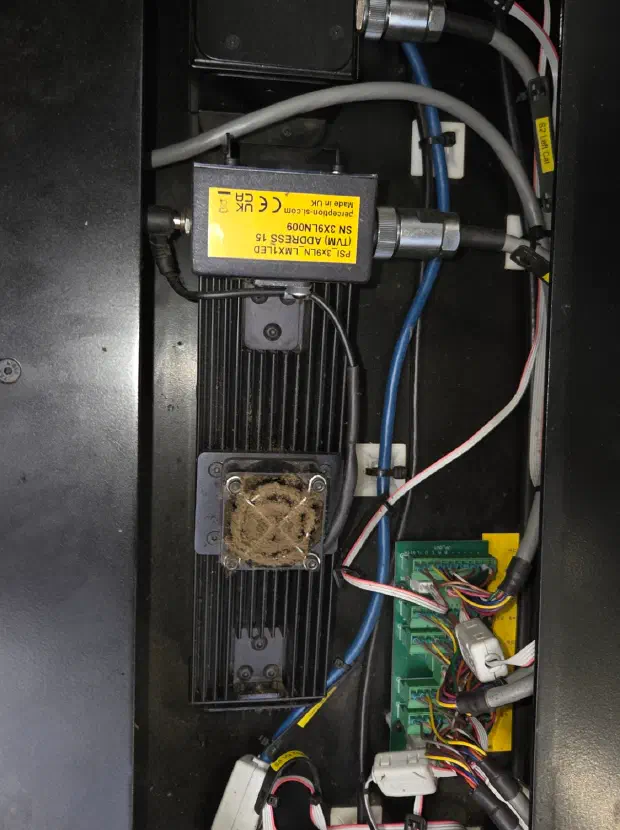
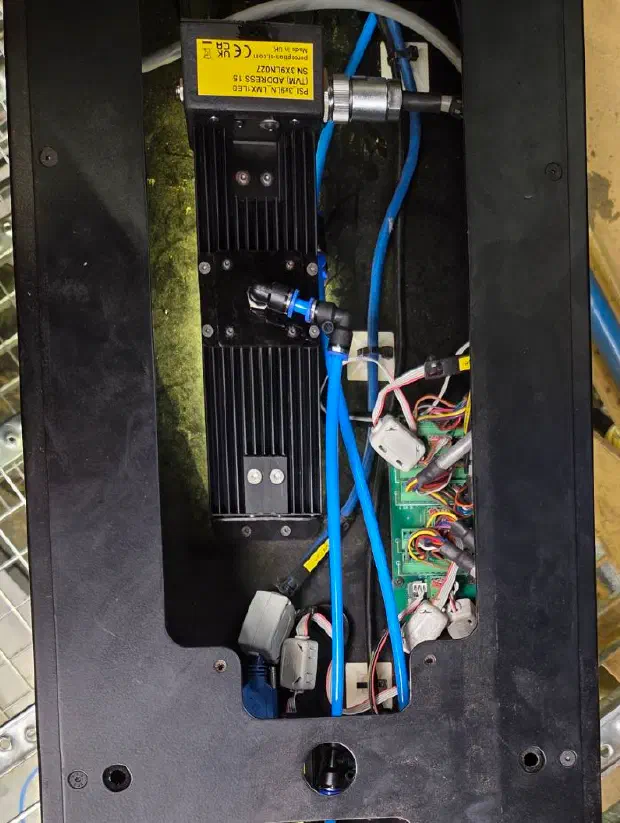
Working with our partners at Perception Sensors & Instrumentation, we developed a retrofit air cooling solution to mitigate this environmental hazard, allowing the lights to maintain a safe internal operating temperature regardless of the presence of the unusual, sticky dust allowing us to resolve the issue without replacing the system or develop expensive custom illumination systems - and maintain the usual lifecycle of the lights. We also advised the site that regular cleaning of everything was strongly recommended as preventative maintenance and good system cleanliness is always a better solution than fixing a problem once it has occurred.
We’ve seen enough production lines to know that the obvious answer isn’t always the right one. The equipment wasn’t the problem, the environment was, and once we’d understood that the solution became much clearer.